
MINT Animation Short Strand: My Spectrum, My Shadow, and My Self
Showing Fri, Mar 6 at 16:25 & Sat, Mar 7 at 11:30, with filmmaker Q&A
In this specially curated MINT Animation Short Strand, animation liberates the self from the bodily form, letting our truest emotions refract through the raw power of flowing lines. A dewdrop meets its reflection in moonlit water and dissolves into flow; a body erupts in surreal adolescent bloom; spiderwebs entangle ancestral trauma.
These films dismantle the mirror of reality. From a black cat's gaze to the boudoir doll's strings, we confront ourselves amongst others, through nightmares and the deepest inner world. These films give shape to what we cannot hold—the phantom self in all its forms.
-
![]()
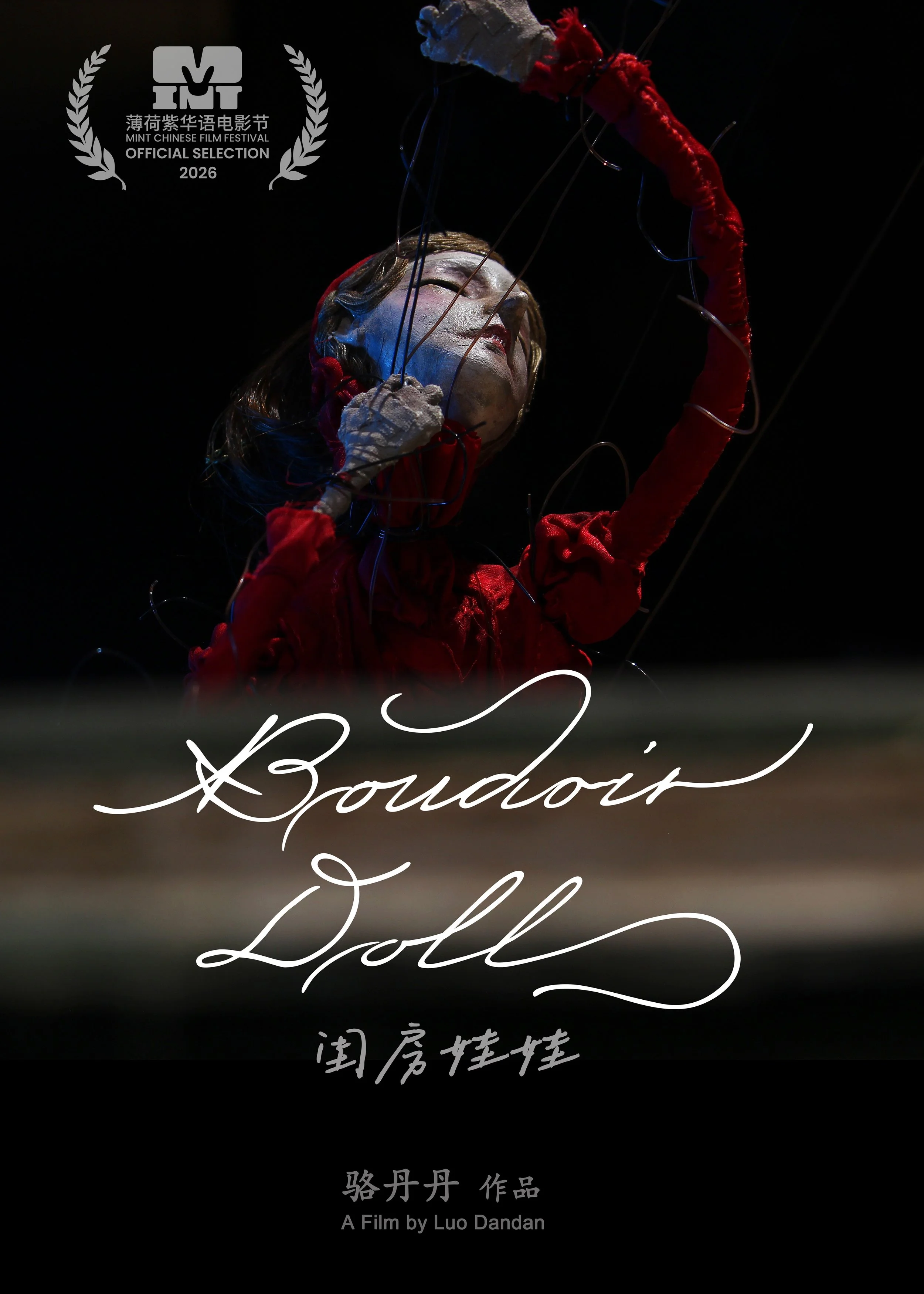
Boudoir Doll 闺房娃娃
UK Premiere
Drama Animation | 14 mins | 2025
-
![]()
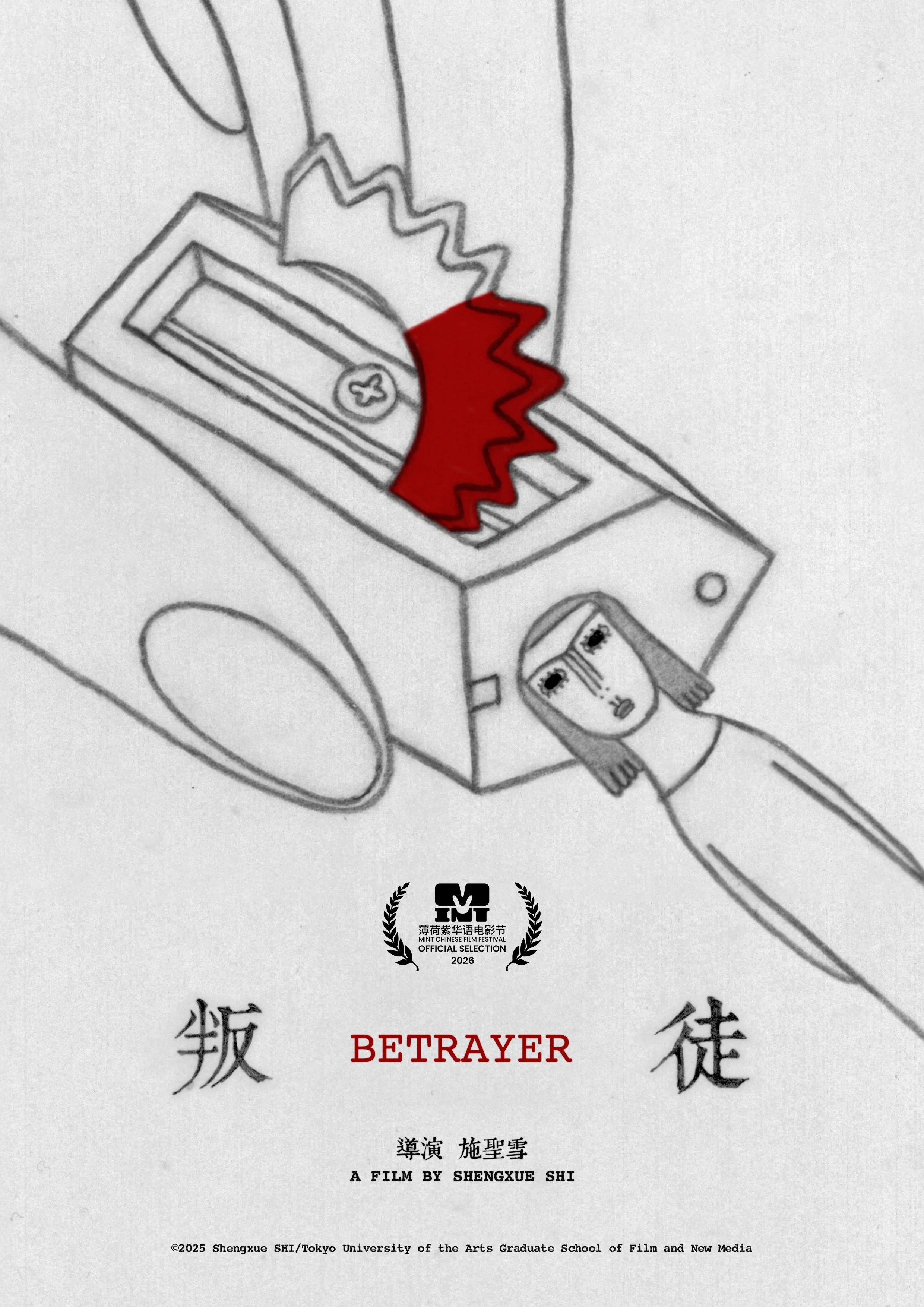
Betrayer 叛徒
UK Premiere
Horror Animation | 11 mins | 2025
-
![]()
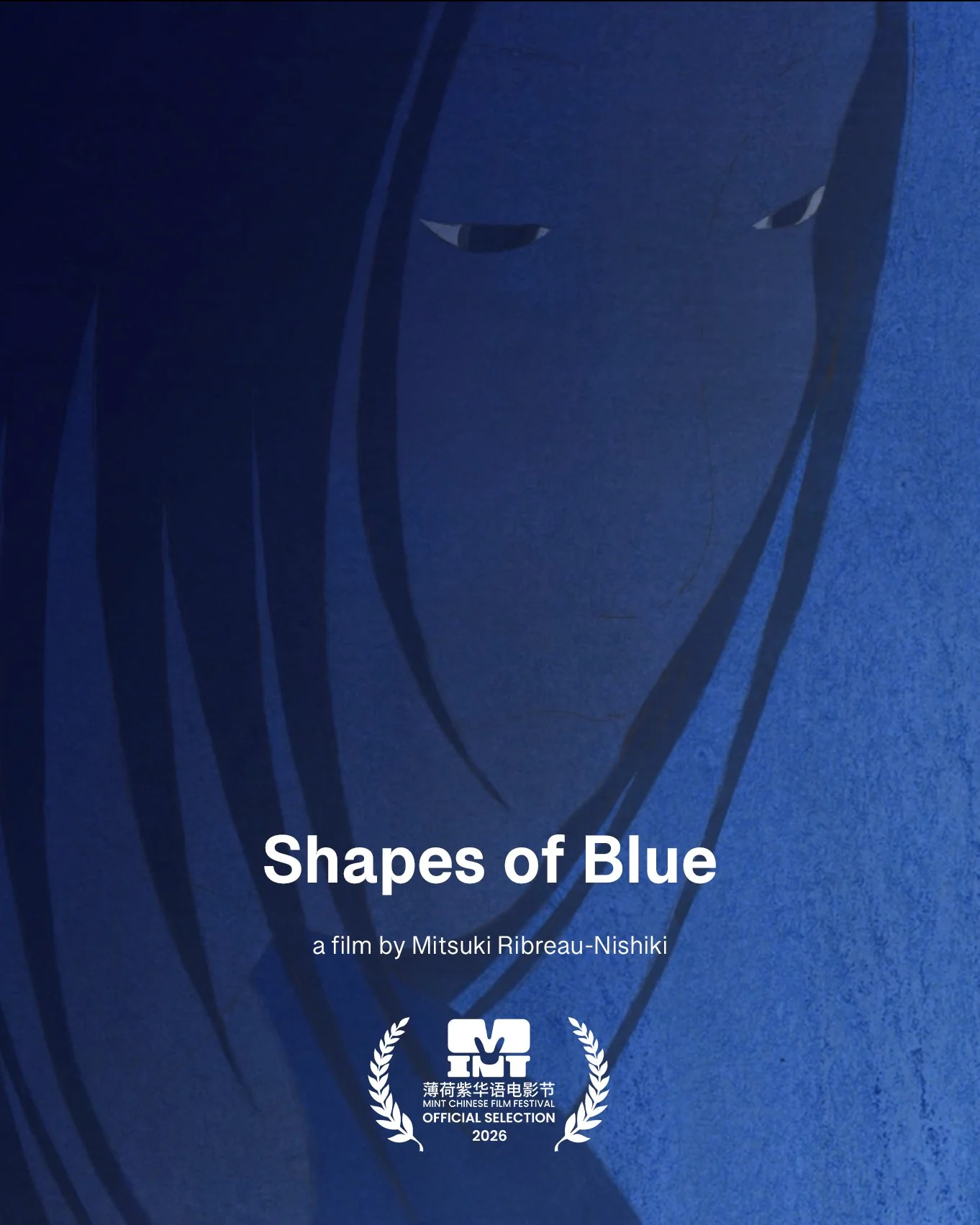
Shapes of Blue
World Premiere
Animation Slice of Life | 7 mins | 2025
-
![]()
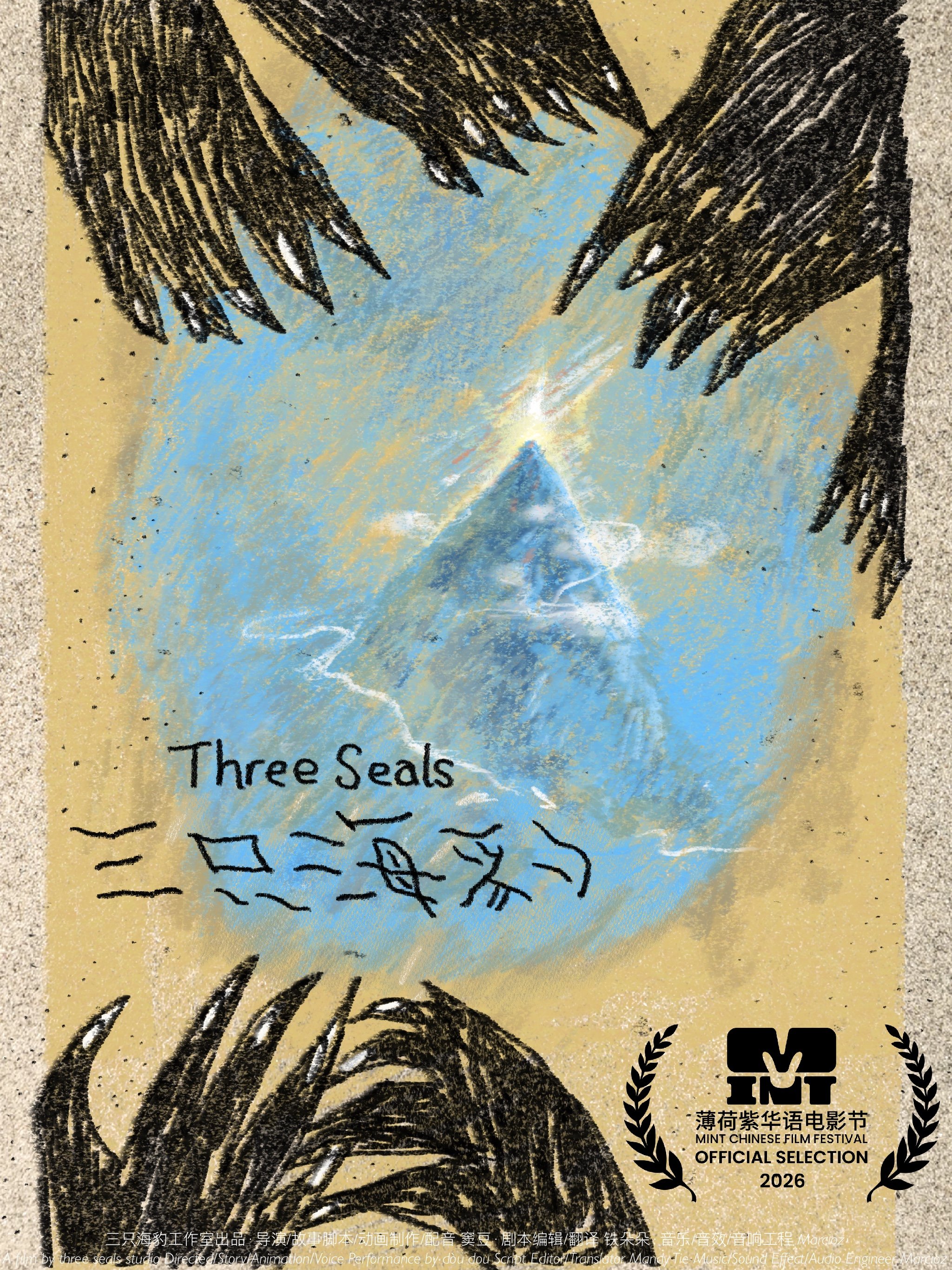
Three Seals 三只海豹
UK Premiere
Adventure Animation | 8 mins | 2025
-
![]()
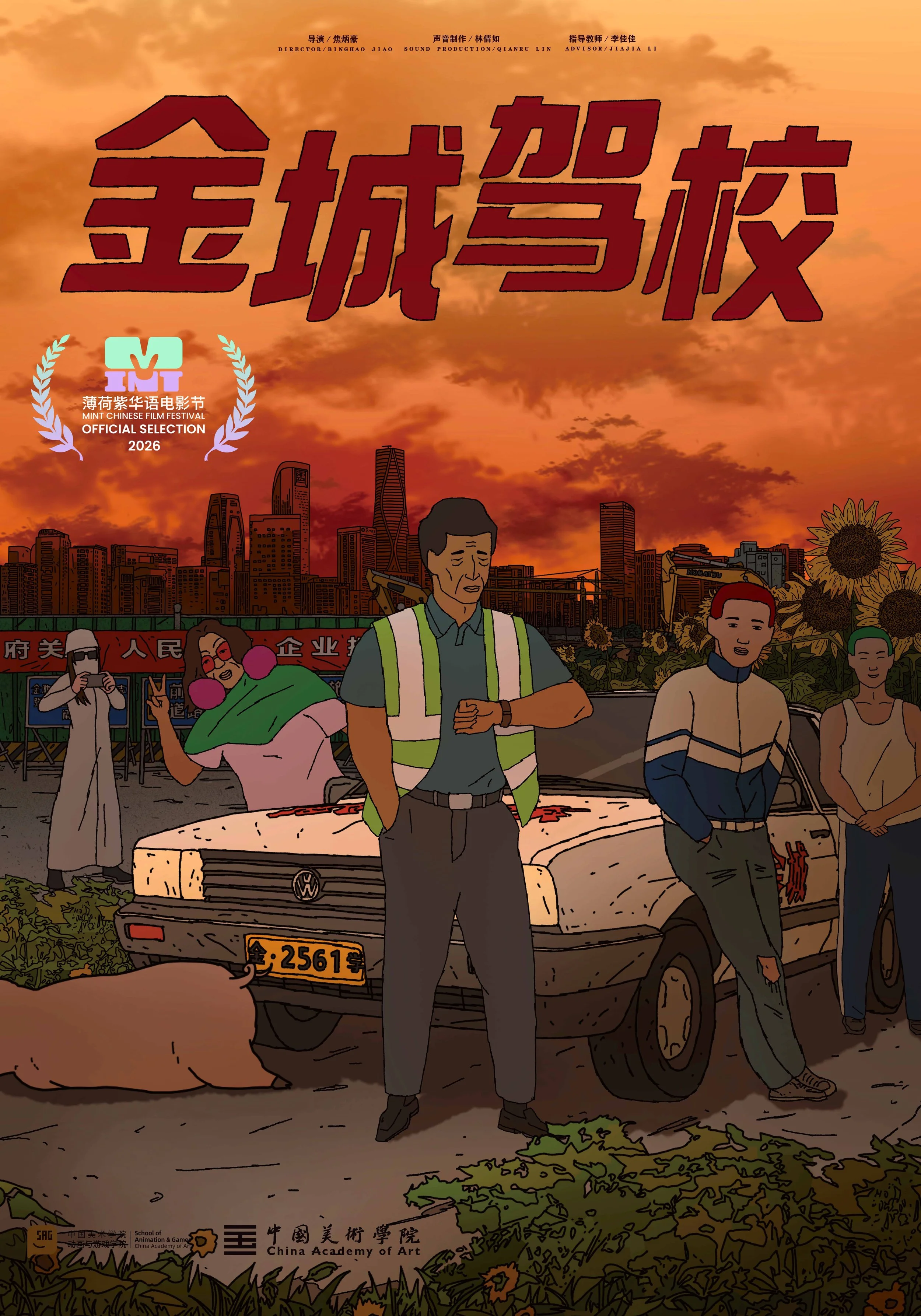
Jincheng Driving School 金城驾校
UK Premiere
Drama Comedy Animation Family | 10 mins | 2025
-
![]()
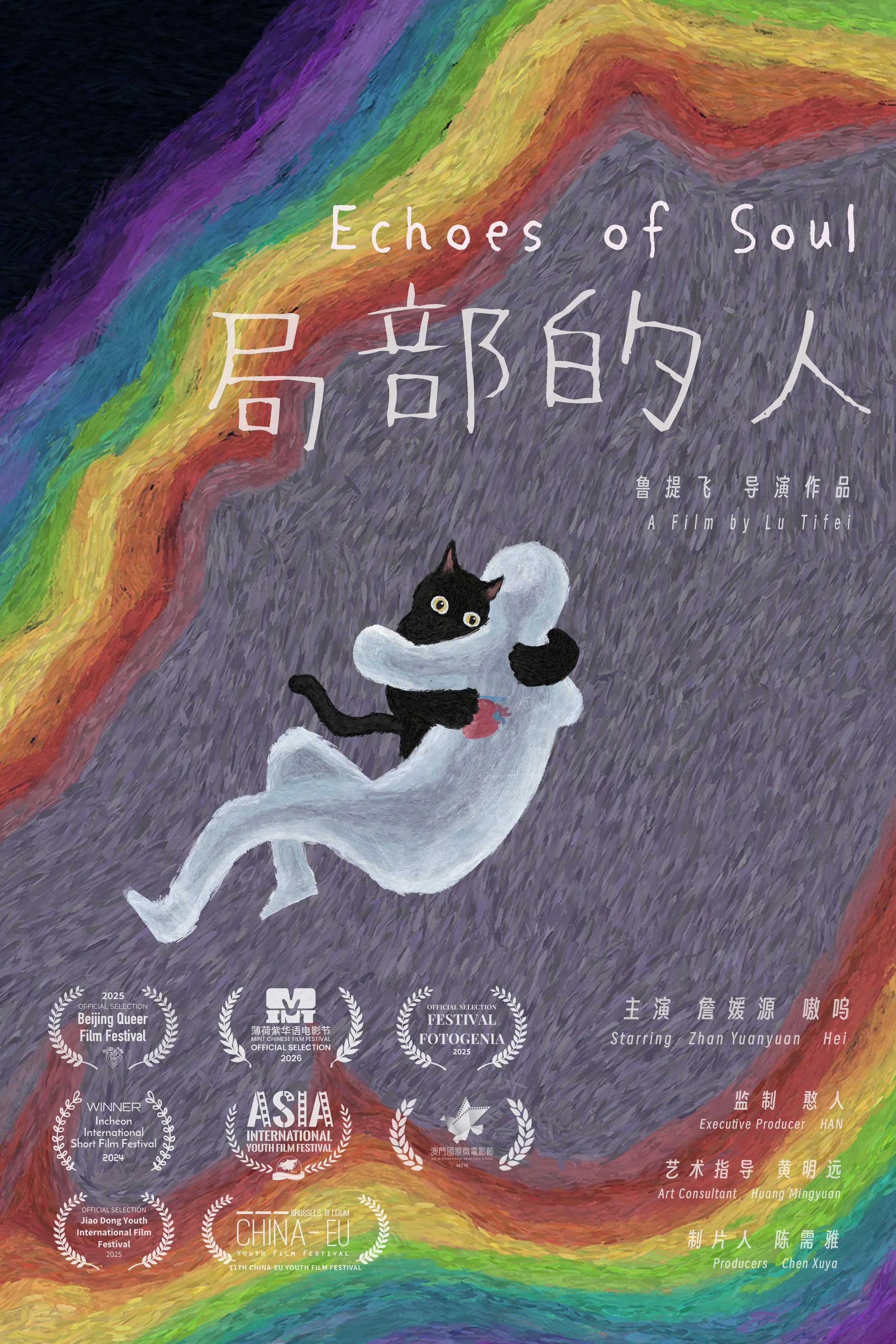
Echoes of Soul 局部的人
European Premiere
Romance Coming-of-Age LGBTQ+ | 11 mins | 2024
-
![]()
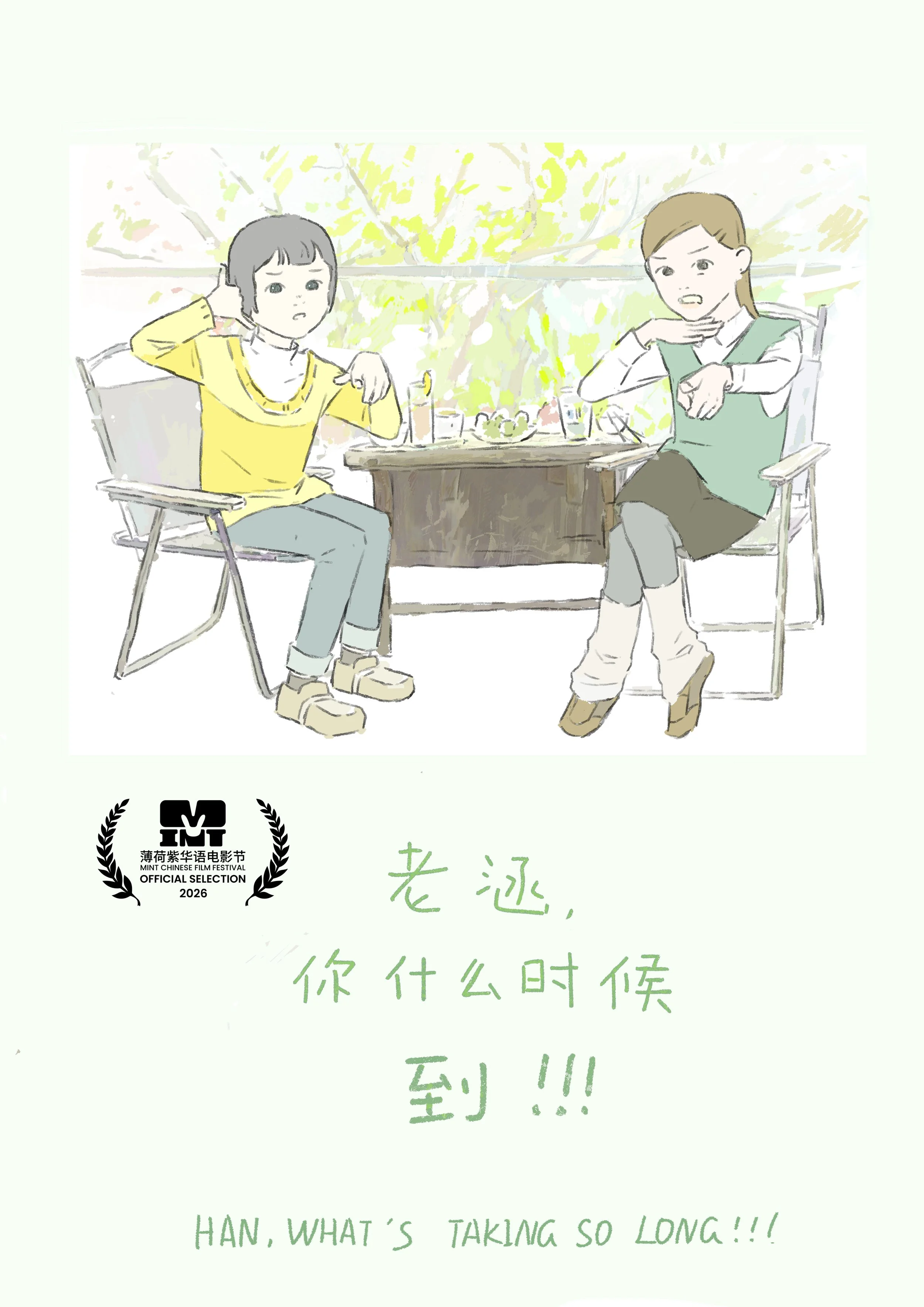
Han, what’s taking so long! 老涵你什么时候到!
International Premiere
Drama Animation | 9 mins | 2025
-
![]()
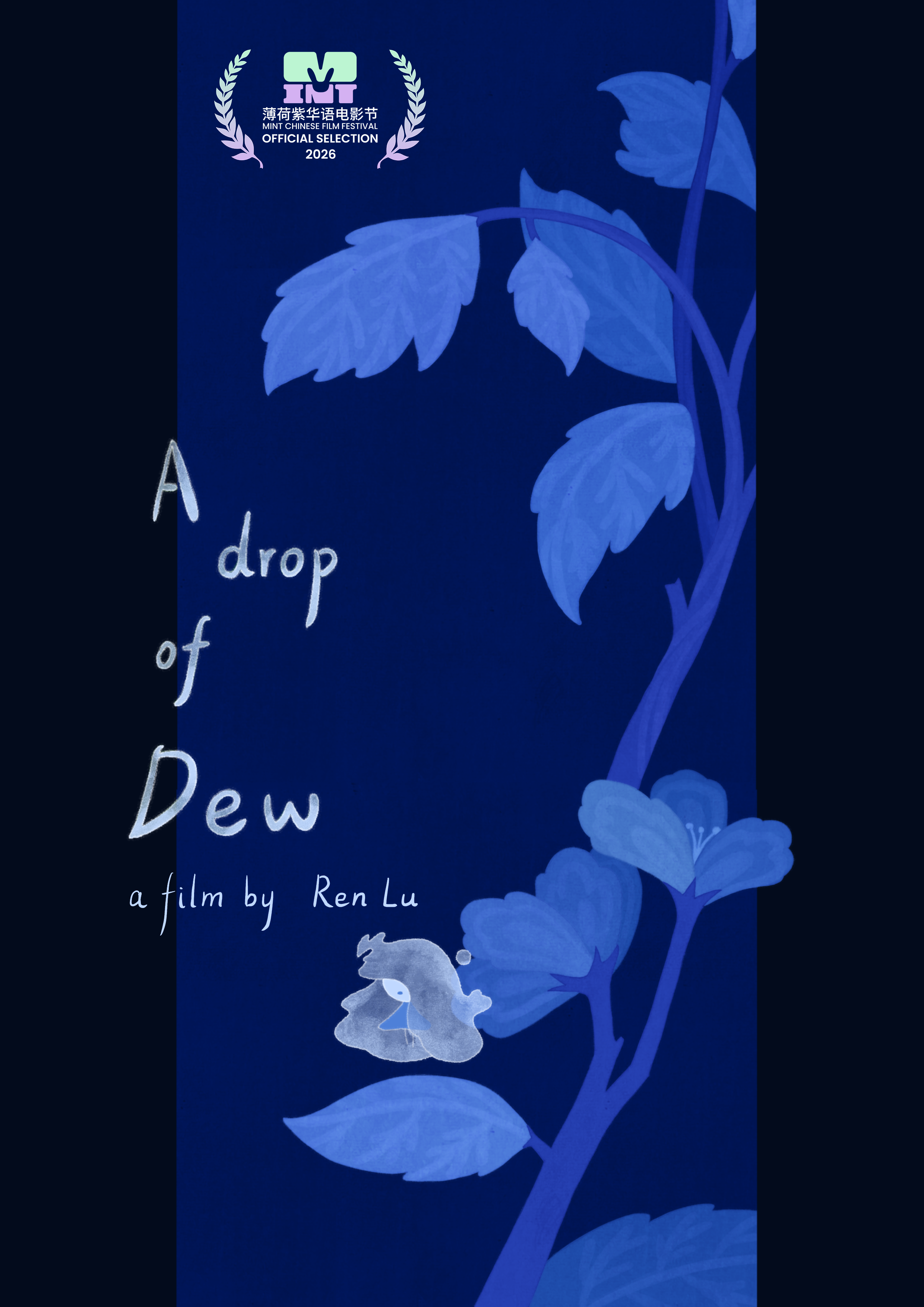
A drop of dew 露珠
UK Premiere
Animation | 5 mins | 2025
Short Film Competition 1
Showing Sun, Mar 8 at 15:45 with filmmaker Q&A
-
![]()
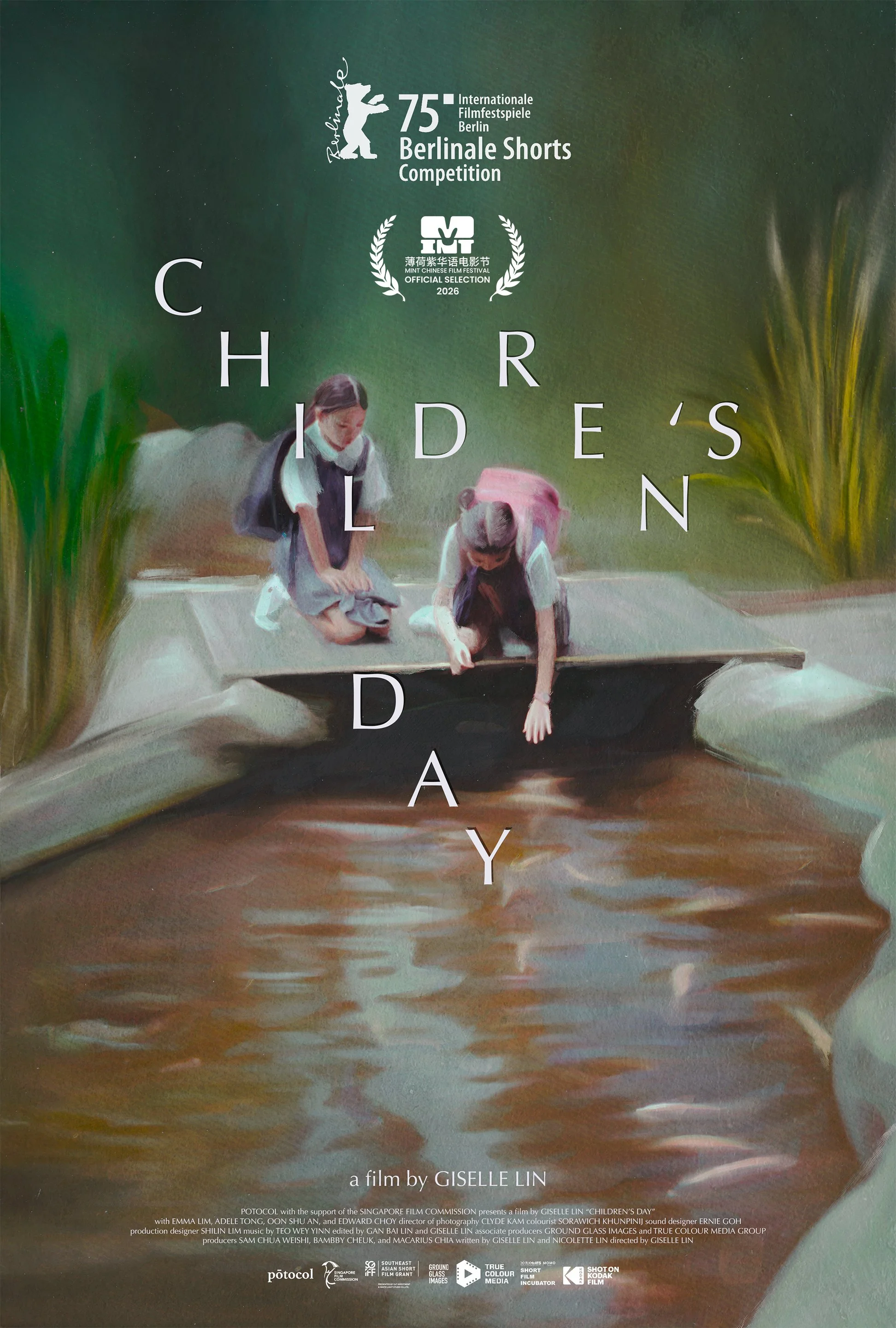
Children’s Day 愿你幸福
UK Premiere
Drama Family | 20 mins | 2025
-
![]()
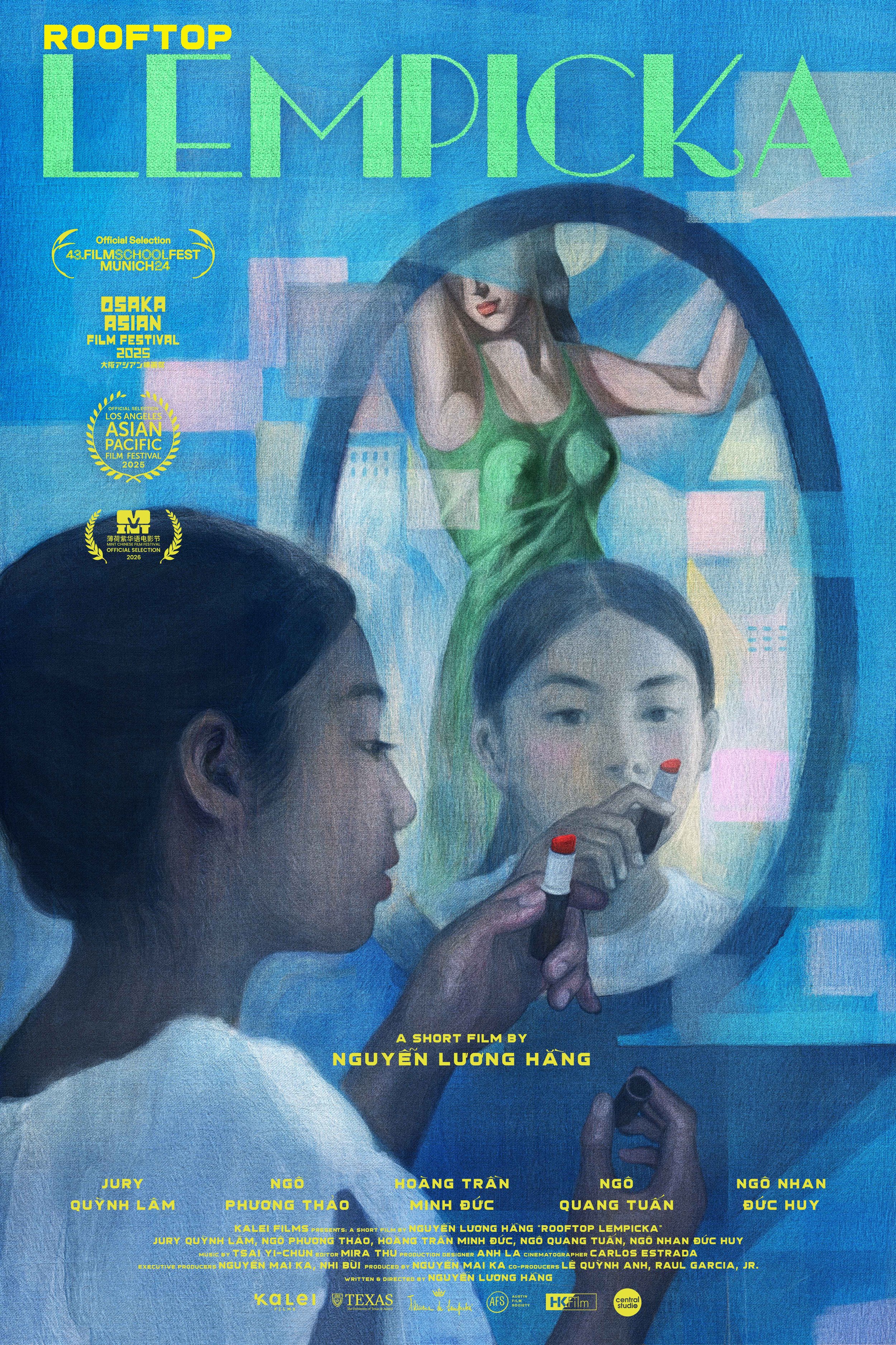
Rooftop Lempicka
UK Premiere
Drama Coming-of-Age | 20 mins | 2025
-
![]()
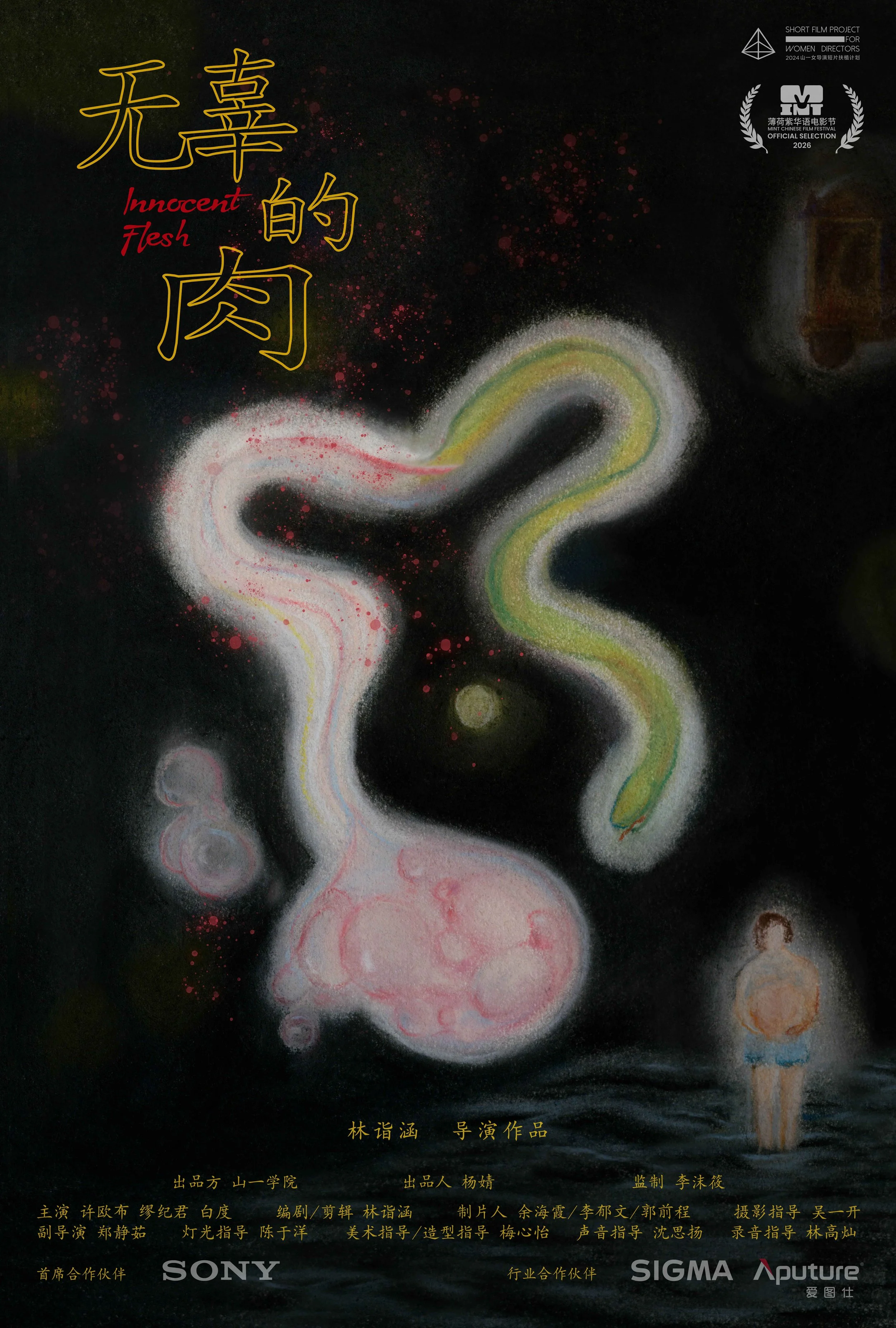
Innocent Flesh 无辜的肉
European Premiere
Drama Family Coming-of-Age | 15 mins | 2024
-
![]()
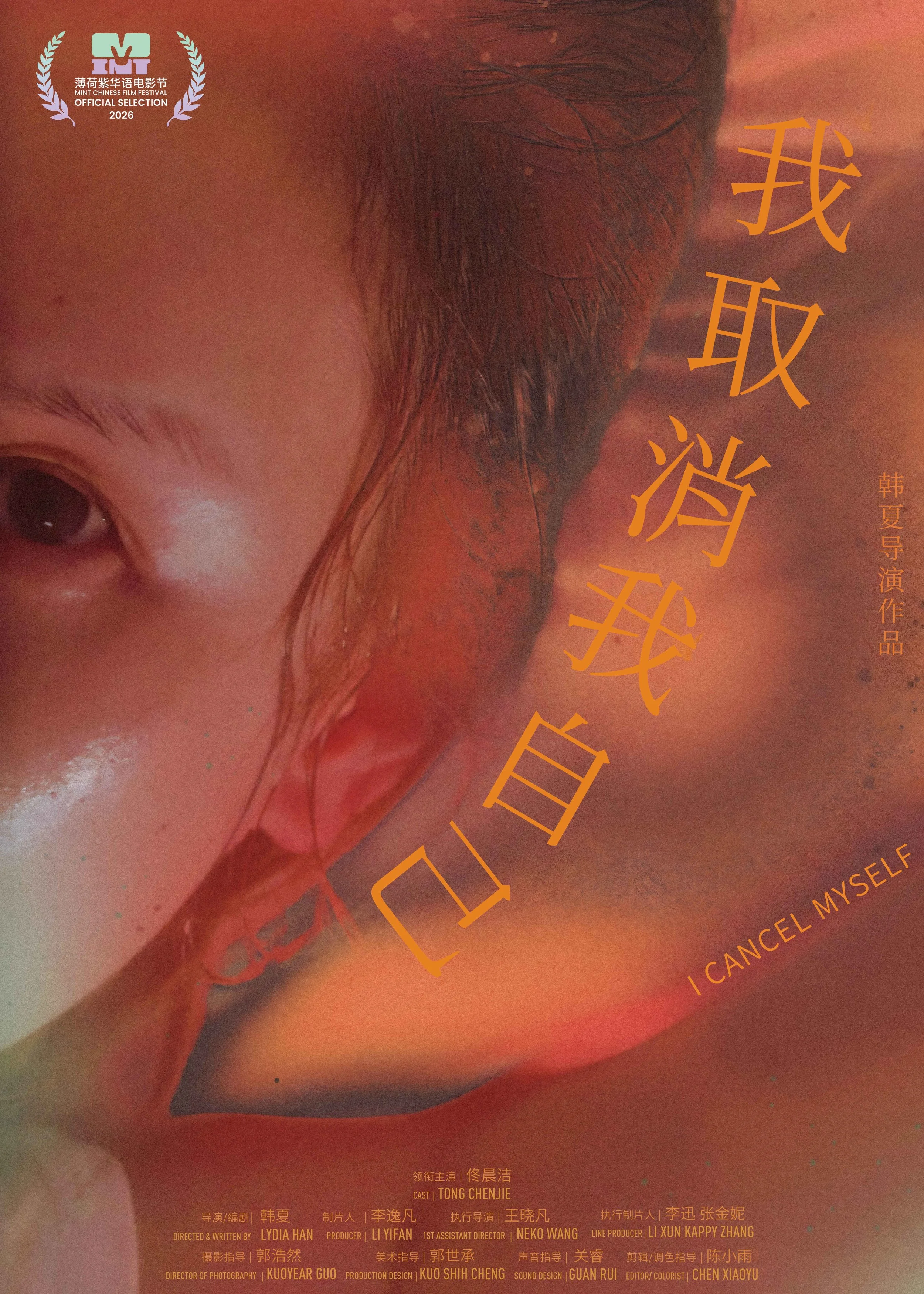
I CANCEL MYSELF 我取消我自己
international Premiere
Drama | 5 mins | 2025
-
![]()
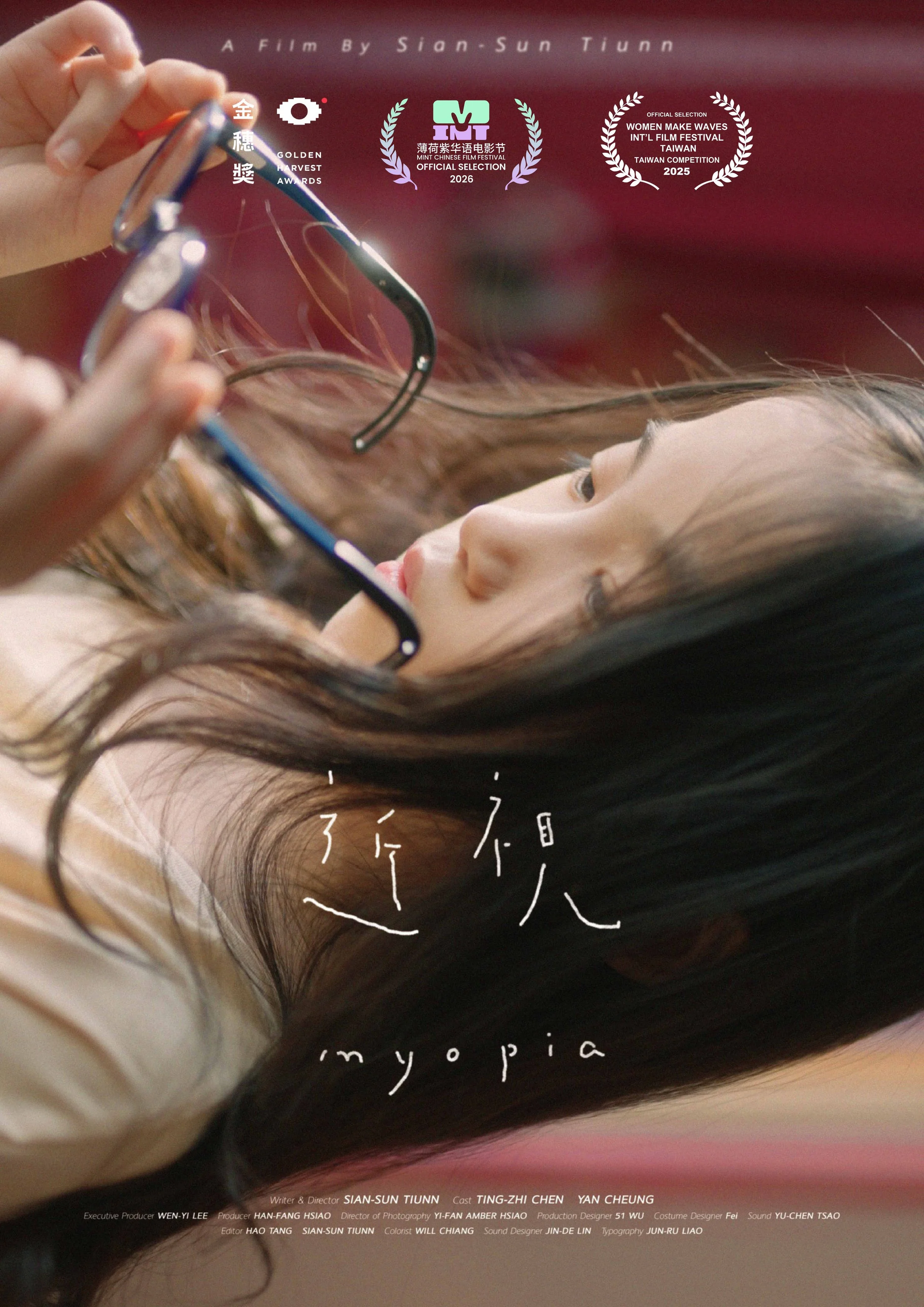
Myopia 近视
International Premiere
Drama Family Coming-of-Age | 15 mins | 2024
-
![]()
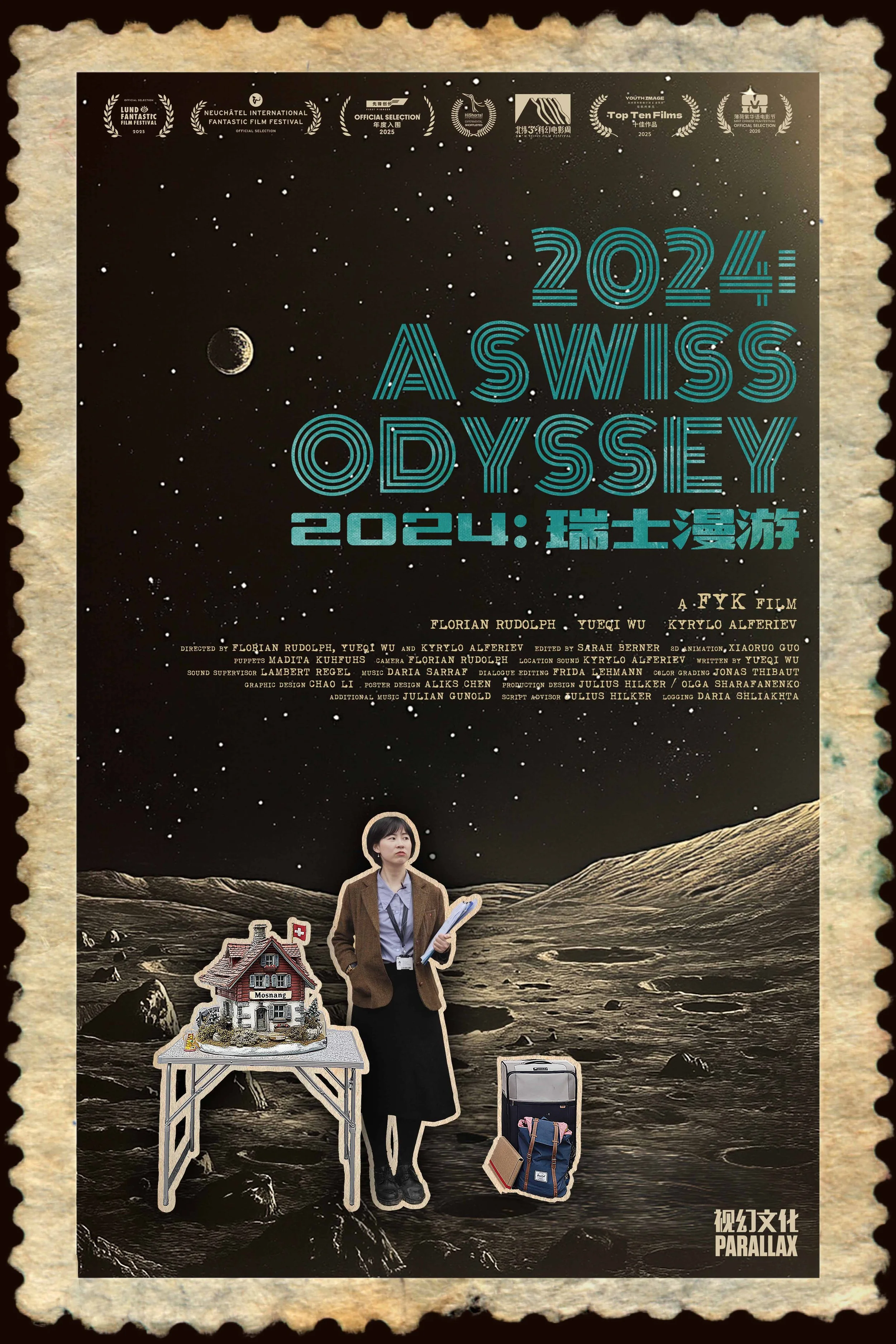
2024: A Swiss Odyssey 2024:瑞士漫游
UK Premiere
Drama Fantasy | 16 mins | 2025
-
![]()
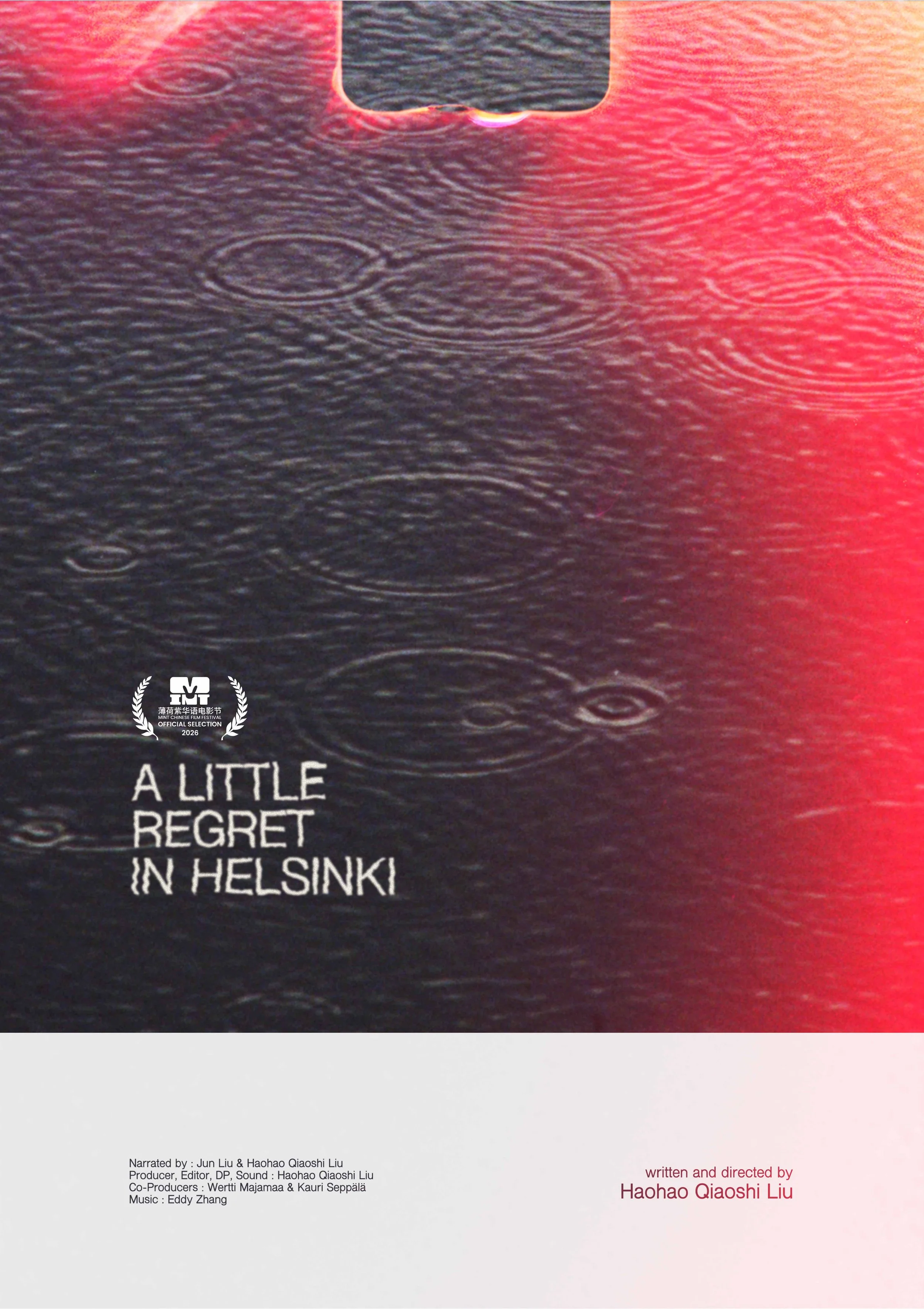
赫尔辛基的小遗憾
UK Premiere
Documentary Essay Film Family Coming-of-Age | 13 mins | 2025
Short Film Competition 2
Showing Sat, Mar 7 at 16:00
-
![]()
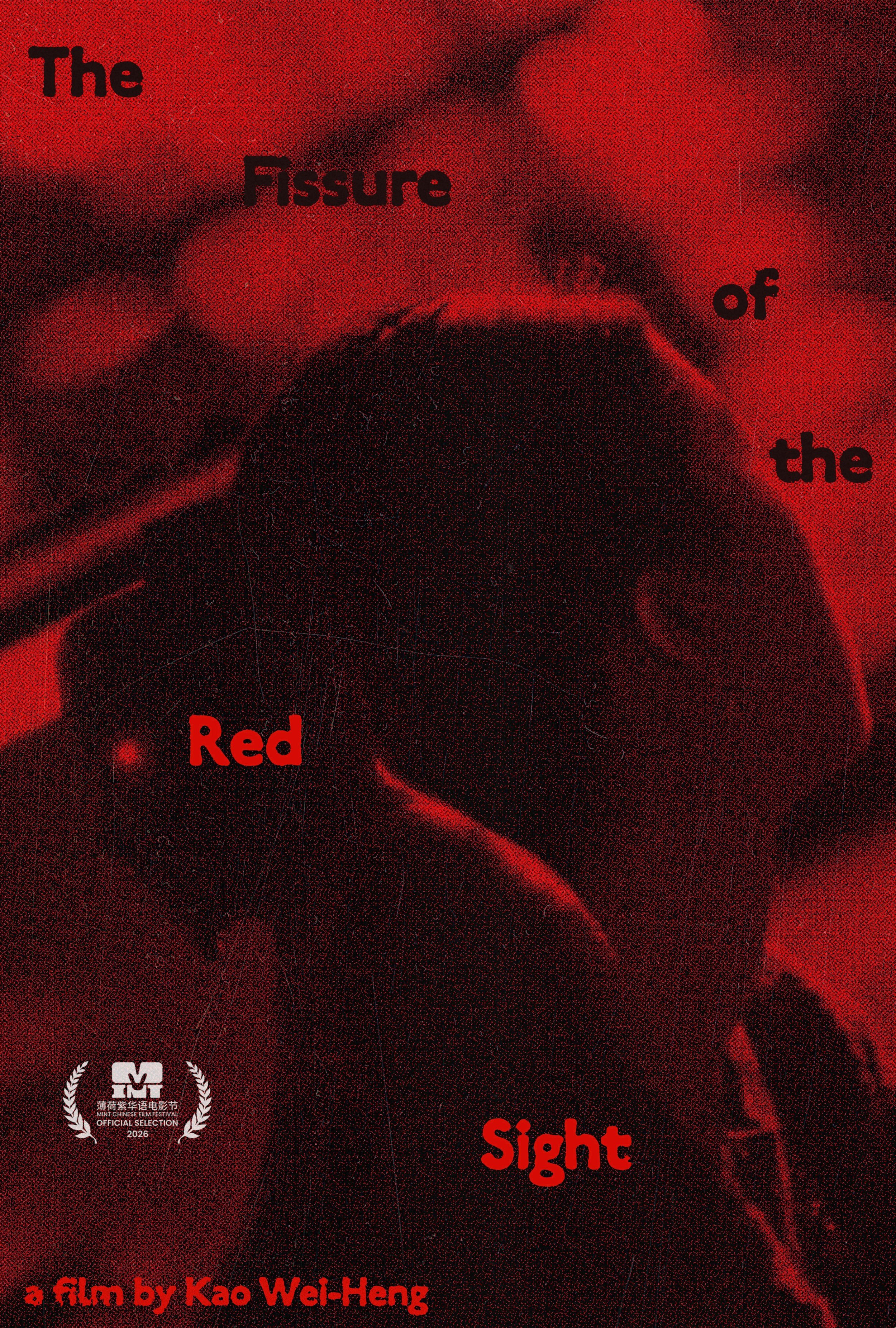
The Fissure of The Red Sight 红隙
UK Premiere
Docu-Fiction | 12 mins | 2025
-
![]()
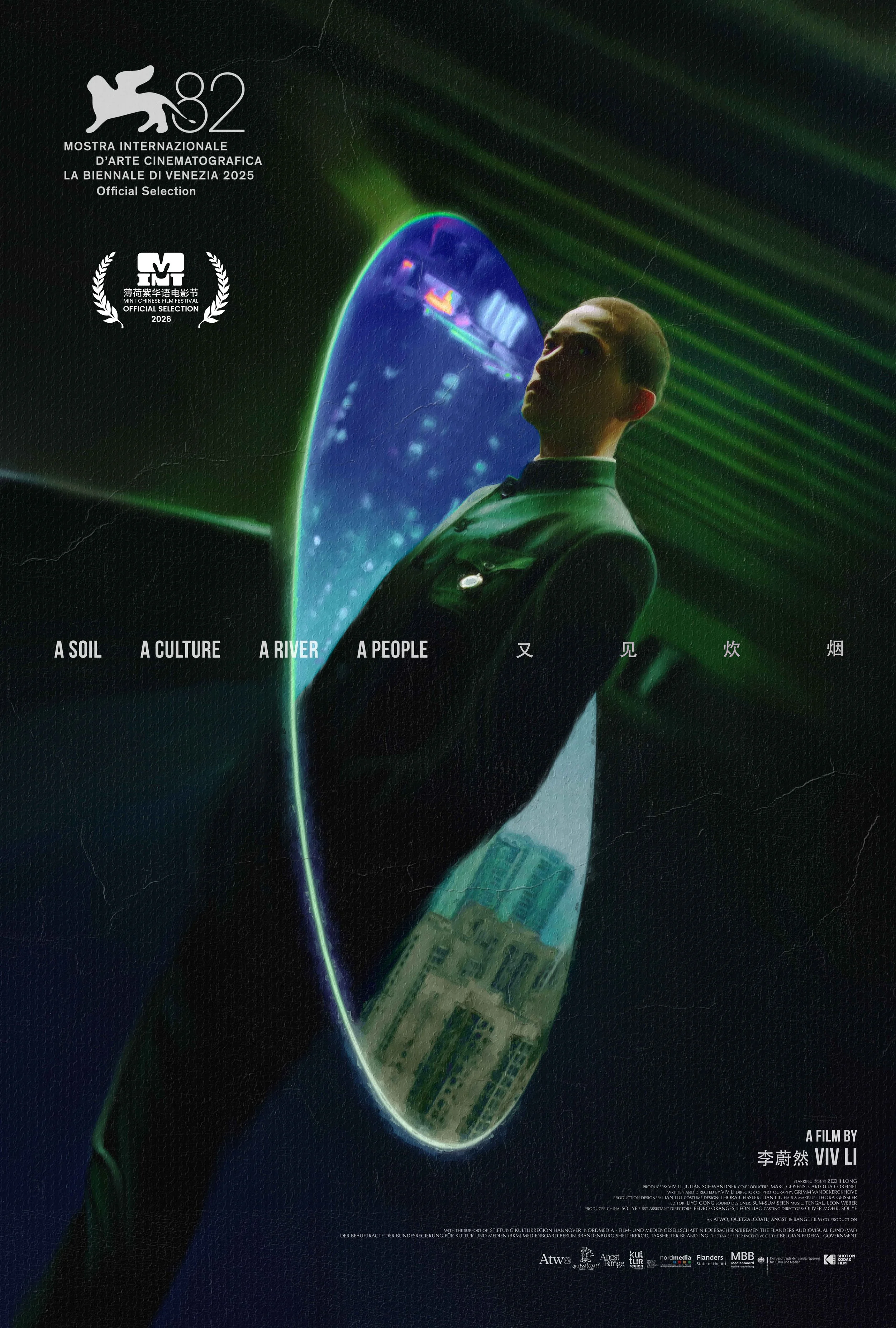
A Soil A Culture A River A People 又见炊烟
UK Premiere
Drama Fantasy | 15 mins | 2025
-
![]()
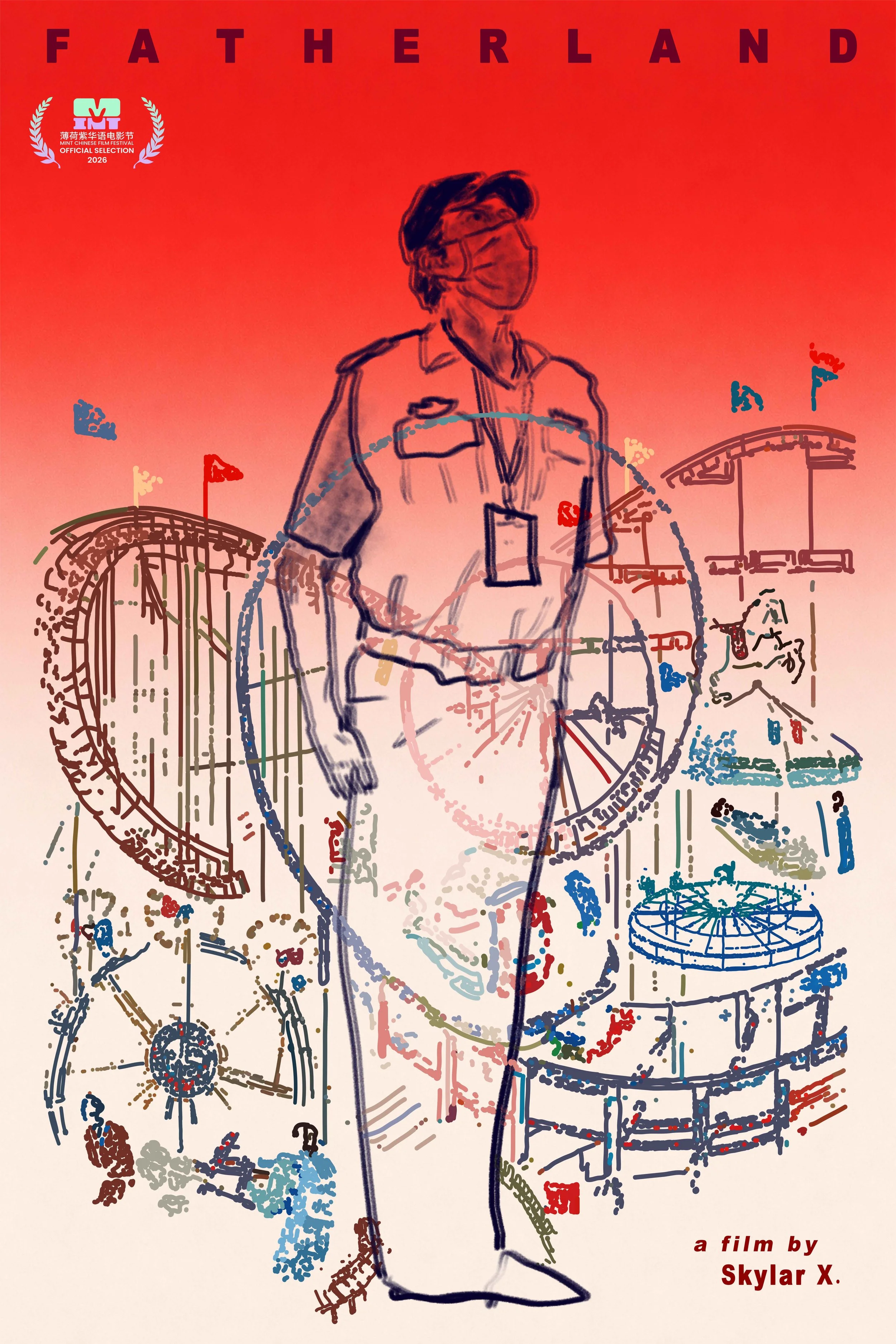
Fatherland
World Premiere
Drama Absurdist Allegory | 14 mins | 2025
-
![]()
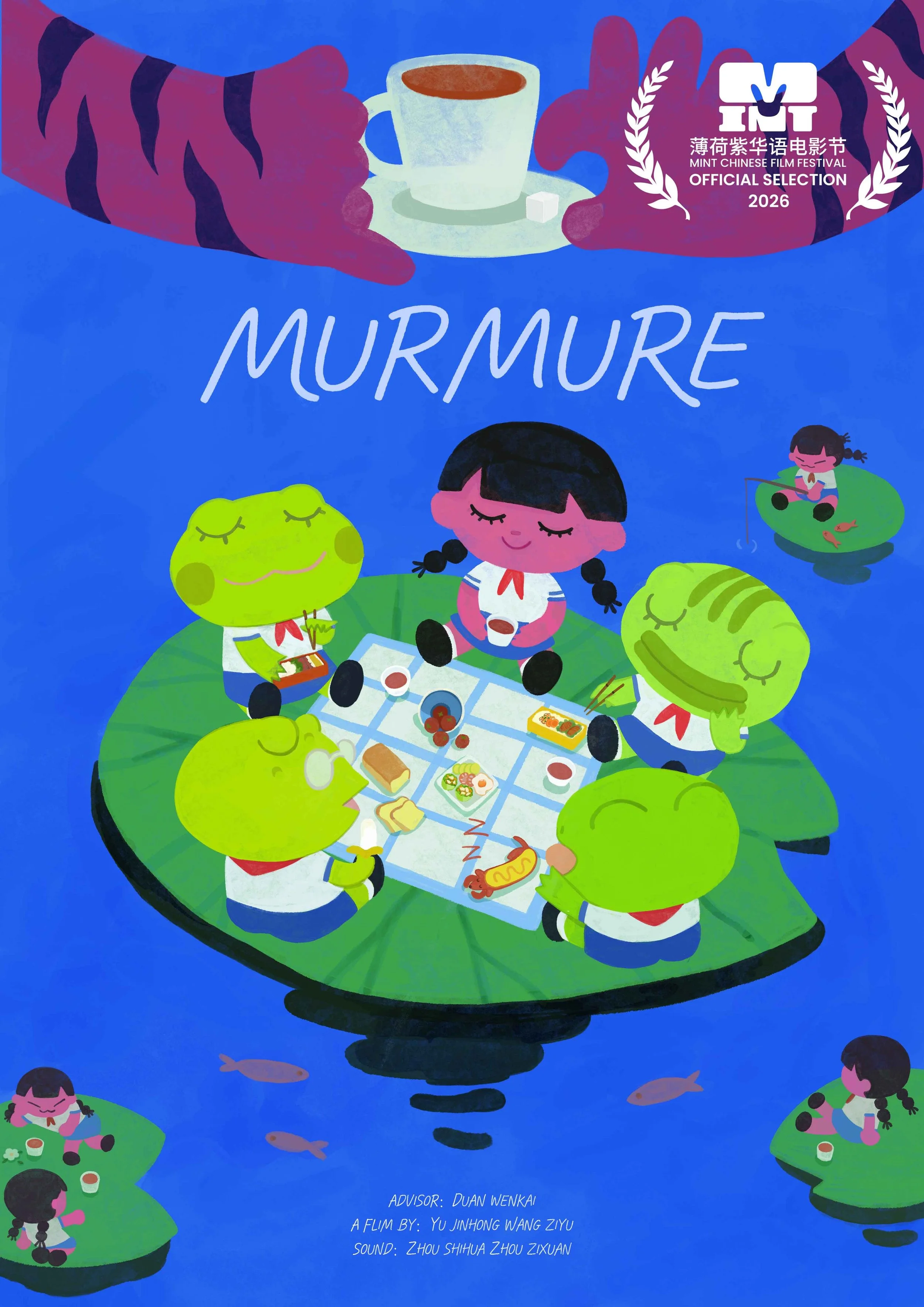
Murmur 喃喃低语
International Premiere
Adventure Animation | 6 mins | 2025
-
![]()
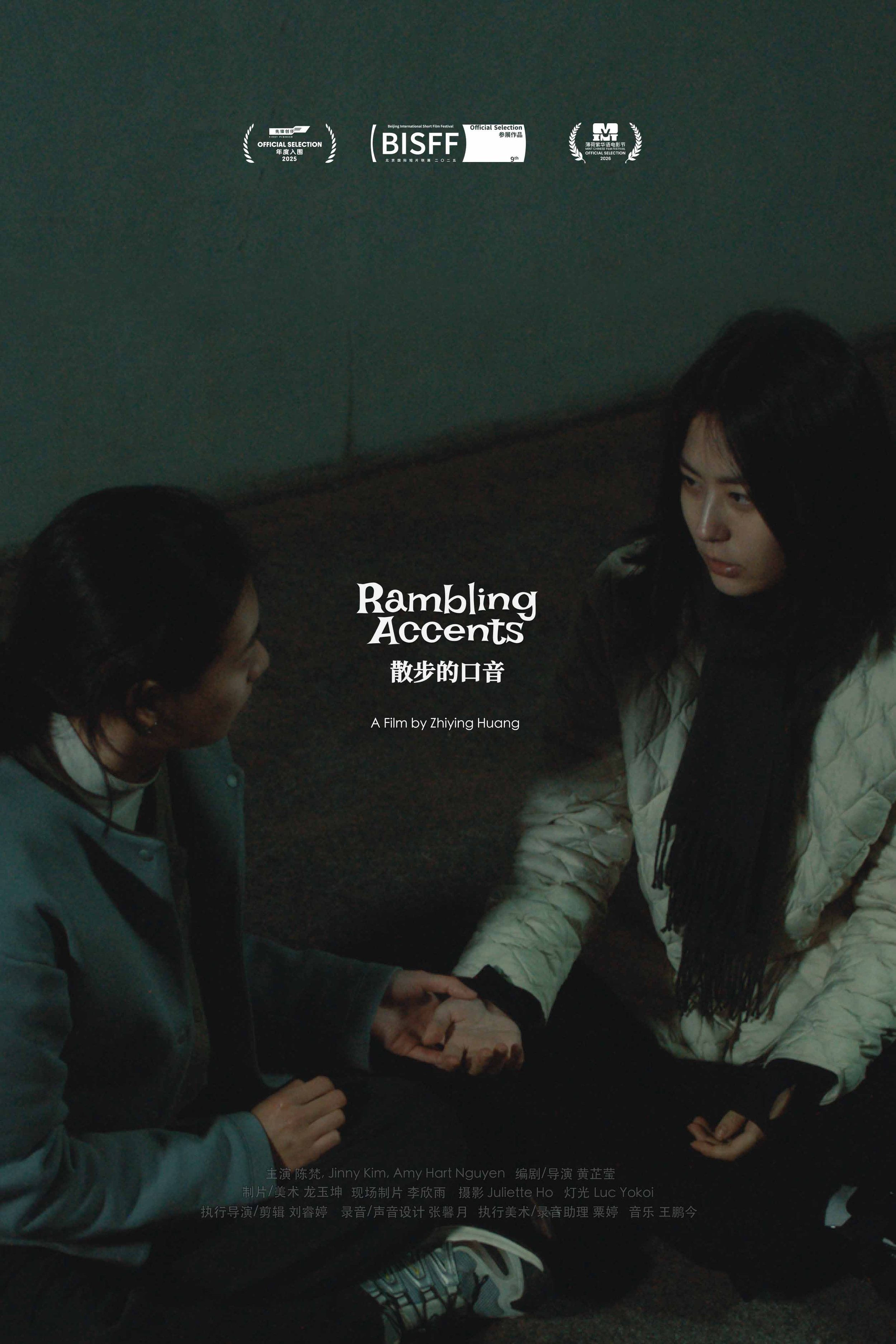
Rambling Accents 散步的口音
International Premiere
LGBTQ+ | 18 mins | 2025
-
![]()
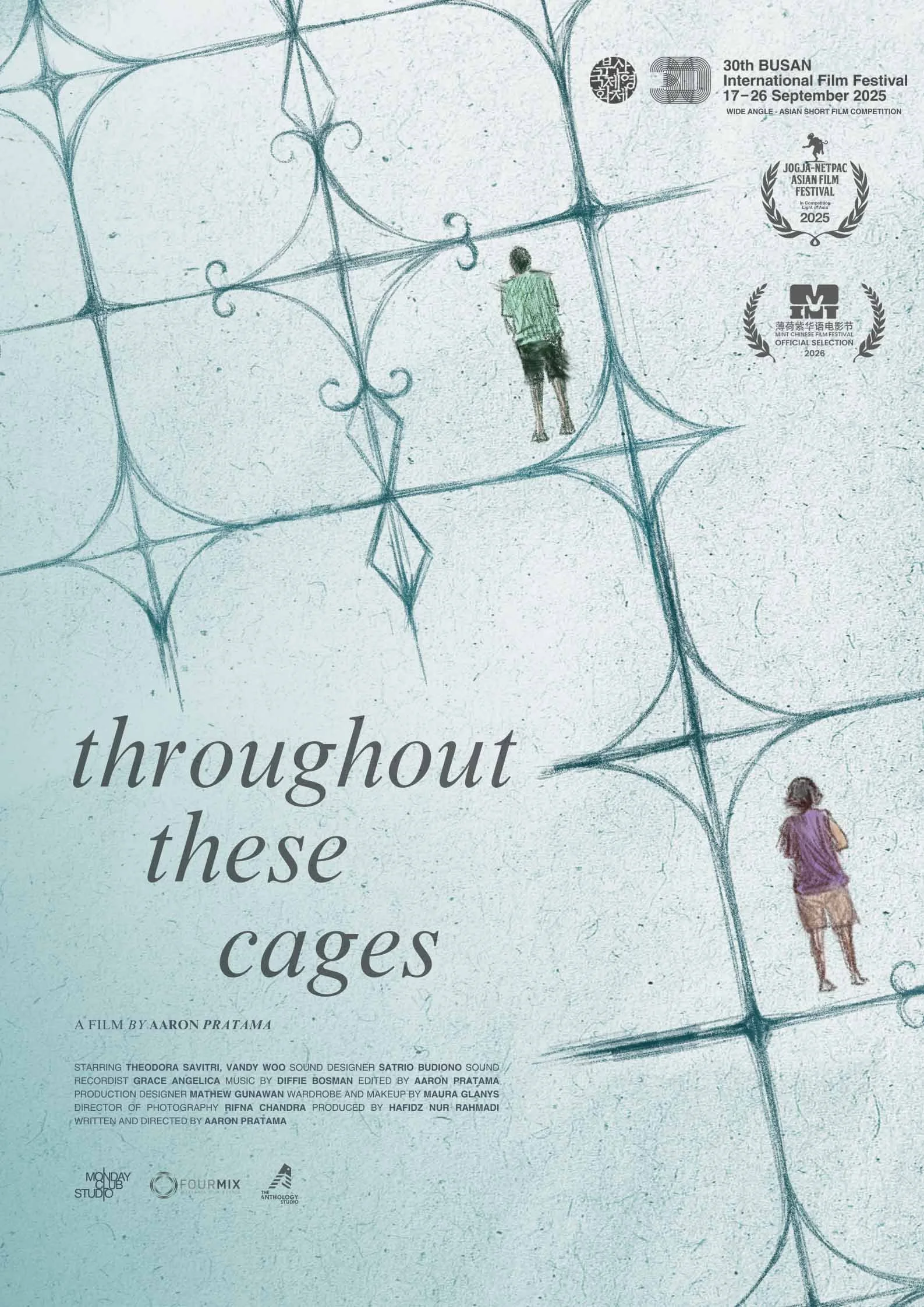
Throughout These Cages 囚笼之下
European Premiere
Drama Family Narrative Historical | 16 mins | 2025
-
![]()
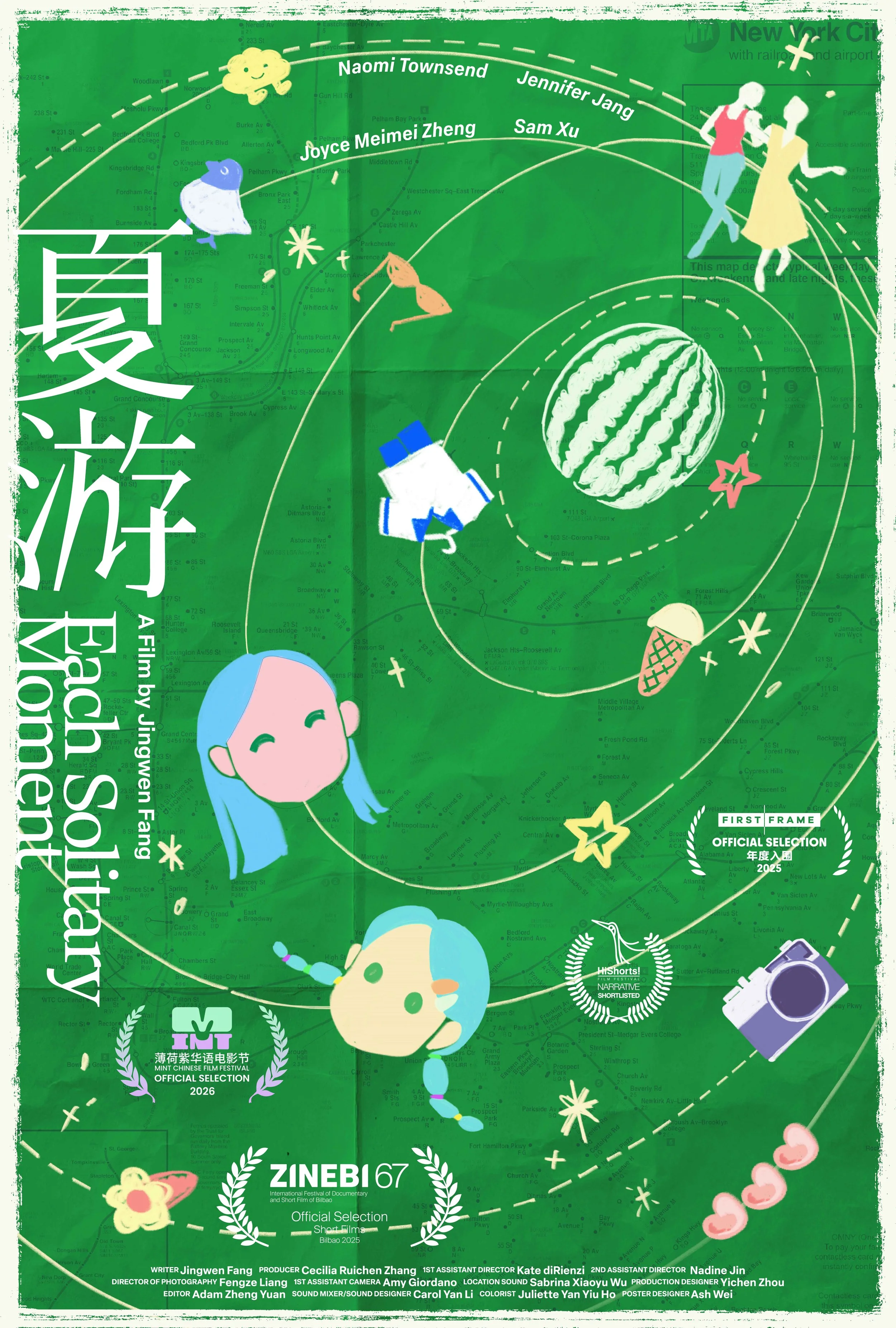
Each Solitary Moment 夏游
UK Premiere
Fantasy Coming-of-Age | 18 mins | 2025
-
![]()
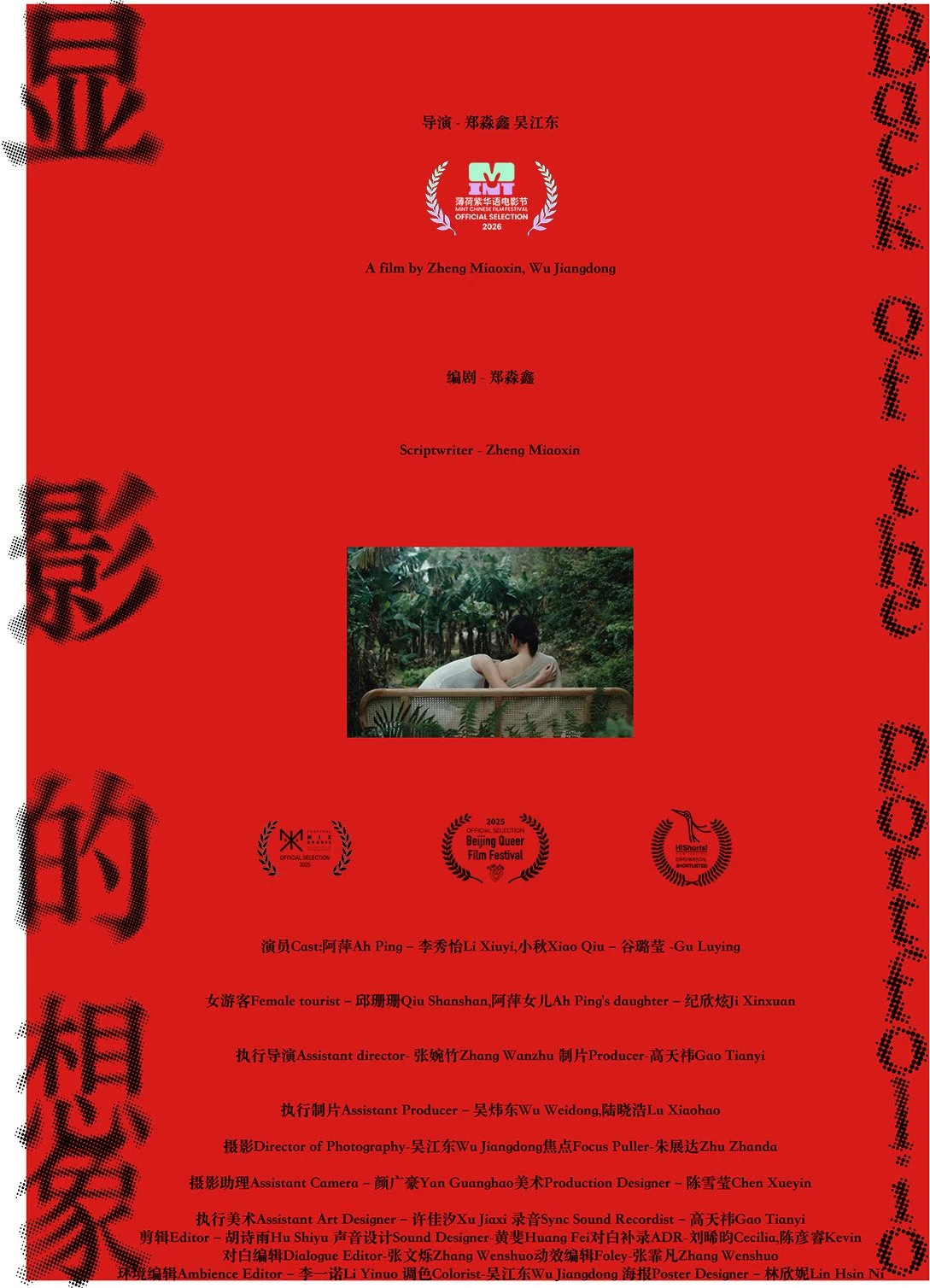
Back of the Portfolio 彰显的想象
European Premiere
Drama | 20 mins | 2025
In our 2026 short film competition programme, we search for belonging—within womanhood, between one another, and in the spaces that hold our stories.
The body is the first site of belonging. Across different stages of life, these films linger on women’s ongoing negotiations with their bodies: a girl sensing the shifts of adolescence and learning to inhabit her own skin; the imagining of motherhood through letters addressed to an unborn child; the visceral heat that surfaces as hormones fluctuate on the verge of menopause. No longer merely something to be looked at, the body becomes a means of feeling the world and recognising the self.
As bodies turn toward others, relationships take shape. Girls move through fractured family structures toward psychological independence, forming bonds with other women along the way. These connections may begin with the glitter of schoolyard encounters, only to grow dense and unresolved in the reunions of adulthood. Feelings that resist articulation, entangled with trauma and projection, surface through exchanged glances, making the gaze itself a form of witnessing. As they chase each other’s shadows, relationships may dissolve and boundaries blur, yet the city quietly bears the traces of their existence.
Within these traces, space extends the narrative. Cities witness the past while holding the future, echoing with hollow, lingering sighs. Red lights seep through cracks, revealing the spectres of colonial history; in a park burdened with trauma, souls remain trapped in fantasies of power. To record a space is also to record its fictions. When we encounter other cultures, are we still outsiders? When we reimagine our homeland, do we remain insiders? Behind window grilles, a house becomes both a sanctuary for memory and a shelter for diasporic identity. Yet upon returning, there is always a sharp, inescapable sense of regret.
Perhaps that little regret is home. (Joy YimingHan, edited by Xiyun Li)